However, in some places, the leaders don't need to make that effort. Though they benefit from vicious cycles and probably do know they're wrong, the citizens might not. If a vicious cycle has been going on for a while, it may just be another part of everyday life. This article on fighting corruption in Africa states that "one of the greatest areas of corruption risk can lie within an organisation's own workforce. Unless trained otherwise, employees who have been brought up in Africa may not consider facilitation payments or bribes as wrong" and "Up until a decade ago, bribery and corruption were an accepted part of doing business." The article seems to imply that corruption is waning due to the increasing risk of losing business; however I believe that, in order to cut corruption and vicious cycles at their roots, education needs to begin early that these methods are wrong and shouldn't be tolerated in any circumstance. It may be fanciful to say that considering that education in Africa isn't the best, but even if a few people learn this in schools, they could influence their peers, eventually helping to halt the reign of a vicious cycle and bring about a more virtuous one.
Wednesday, November 27, 2013
Unconscious Perpetuation of Vicious Cycles
Not all people who allow and encourage vicious cycles of corruption and greed do so in the name of personal profit. Not everyone purposefully sets out to further twist the system. In some cases, like Columbia and Argentina, the general population knows what their government (or at least, the people in charge) is doing is wrong; the problem is that the ones in charge use force and fear to subdue resistance.

However, in some places, the leaders don't need to make that effort. Though they benefit from vicious cycles and probably do know they're wrong, the citizens might not. If a vicious cycle has been going on for a while, it may just be another part of everyday life. This article on fighting corruption in Africa states that "one of the greatest areas of corruption risk can lie within an organisation's own workforce. Unless trained otherwise, employees who have been brought up in Africa may not consider facilitation payments or bribes as wrong" and "Up until a decade ago, bribery and corruption were an accepted part of doing business." The article seems to imply that corruption is waning due to the increasing risk of losing business; however I believe that, in order to cut corruption and vicious cycles at their roots, education needs to begin early that these methods are wrong and shouldn't be tolerated in any circumstance. It may be fanciful to say that considering that education in Africa isn't the best, but even if a few people learn this in schools, they could influence their peers, eventually helping to halt the reign of a vicious cycle and bring about a more virtuous one.
Monday, November 25, 2013
Modern Vicious Cycle
In Thailand, police are having to deal with thousands of protestors who overran the capital and cut power to the Finance Ministry according to USA TODAY. The protestors are taking action against the government and are trying to oust the the Prime Minister Yingluck Shinawatra, claiming that they want to force civil servants to stop working, crippling the government. The Thailand government is calling the movement a coup, the protesters are saying that Yingluck is allowing his brother to run the government, even though the brother was convicted of corruption charges. This sad, political turmoil is just another example of the vicious cycle. Yingluck's brother, Thaksni Shinawatra, was in charge until 2008 when the military forcibly removed him. However, instead of things getting, better, they remained bad in Thailand, with a brother of the removed leader taking charge in the so called democracy. The situation can be linked to that of Guatemala in Why Nations Fail, where leaders who were removed were just continuously replaced by family members, with the same original families remaining in charge from the colonial period into fairly modern history. As Thailand shows, the vicious cycle is alive and thriving.
Sunday, November 24, 2013
Iowans, Ethanol, and Influence on Institutions
In Chapter 3, A & R argue that politics determine the institutions a nation has and the nature of an economy is determined by incentives created by institutions. The debate surrounding ethanol policies and elections in Iowa illustrate the ties between economic and political institutions. Much of Iowa's economy depends on corn. In order to win votes in Iowa (politics), politicians would support federal backing of ethanol (an institution) providing a surge in demand for corn and a massive economic incentive for corn farmers. Recently, however, there has been much concern about the environmental impact of the massive amounts of corn farming as farmers farm on land meant for conservation and the economic impact of the high price of corn on food prices - particularly since the Associated Press published this report. This month, the Obama administration proposed cutting the required amount of ethanol in the nation's fuel supply for the first time since a standard was established in 2007, and the impact of the lack of political popularity of ethanol policies on the economy and institutions of Iowa could be huge.
The Vicious Cycle Amongst Us
Besides political vicious cycles, there is another, less
publicized version of the vicious cycle, one that haunts us here at UVa. We witness it every day, perhaps even
take place in it. History has taught us that it is difficult to break a vicious
cycle, but for their own sakes, the ones caught in this vicious cycle must try.
This is the vicious cycle of procrastination.
You’ve had a tough Monday, but the one bright spot of the
week is your COLA. After all, it’s only once a week, it’s one credit, and
everyone in the class is super awesome. You can push off that reading until
Monday night. You can do that blog at 11:32pm on Sunday. Whew, you got it all
done in time. Wow, that was a lot of work… You really don’t feel like doing
anything else because you’ve just worked so hard, and- wow! A new meme! Wait,
it’s Sunday again? Another blog?
Oh dang…
And voila. You’ve begun your own vicious cycle of procrastination.
So where do we begin with breaking this cycle? Can it even
be done? To answer this, we must understand where the problem stems from. Procrastination
typically results from feeling overwhelmed, which is pretty easy to feel as a
first year. Classes you may have every
day, or every other day, pile up and take precedence over ‘minor things,’
which, a week later, somehow don’t feel so minor any more. However, fear not.
There are ways to combat it. In fact, this
article highlights 29 helpful ways to beat procrastination. They’re all
hunky dory, but honestly I believe
number 10 is the best. By carrying out the other methods, you’re actually
probably just prolonging your procrastination.
If you want things done, just do them, and stick to your
goals, no wayward paths, no YouTube, no Facebook, no email, no memes. Just do it. It’s easier
said than done, but just take a deep breath, let yourself focus, see that it’s
not the end of the world. You can do it! And if you stick to your course, you’ll find
that the stress off your shoulders is well worth it in
the end.
The Gospel of Matthew
For everyone who has will be given more, and he will have an abundance. Whoever does not have, even what he has will be taken from him. Matthew 25:29
While reading Why Nations Fail by Acemoğlu and Robinson, this Bible passage came to mind. In this quote, Jesus is talking about spiritual awareness. He points out the fact that when one has a little faith in spiritual matters, that faith provides room for letting more awareness and understanding come to him. But the one who does not have spiritual awareness or faith will not be able grow spiritually. That path will be closed off to him because he doesn't give it a chance. This is remarkably similar to the vicious and virtuous cycles written about in Why Nations Fail, with inclusive and extractive institutions taking the place of spiritual awareness. Countries like England, which had some inclusive institutions had the chance to grow and prosper, becoming more inclusive and more wealthy with time. Countries like Sierra Leone, which have almost no inclusive institutions, do not have the chance to grow economically or to become more inclusive, and instead stay very poor. This is how vicious and virtuous cycles parallel the teachings of Jesus.
http://ourrabbijesus.com/articles/those-who-have-much-will-be-given-more/
Saturday, November 23, 2013
The Results of Low Infrastructural Power in Argentina
Argentina used to be a complicit partner in the international drug trade through its participation as a hub and trade route for drug smuggling. But as various narcotics agencies in large drug production nations have constricted and damaged many large-scale drug operations in their own borders, it has bubbled up in other places such as Argentina. Even more discouraging, is that the response from Argentine authorities has been weak and funding to combat an exponentially expanding drug production and distribution network has only been increased by 6% for the coming fiscal year. Keeping in mind that independent economic sources place Argentine inflation at around 25% it becomes clear that this is in fact a worrisome decrease in narcotics enforcement funding that will surely allow the drug empires in Argentina to snowball to ever more power.
It seems to be the low infrastructural power resulting from weak state institutions and an ineffective bureaucracy that have allowed this ballooning to occur in Argentina. Hopefully, Argentina can reach a critical juncture that causes an institutional development which makes possible the strict and effective enforcement of laws relating to narcotics. Until that happens though, the drug lords will ensure the most negative of persistence by continuing to perpetuate and defend the extractive economic institutions that they have created to extract money from the Argentine people and state through the drug trade and drug related crime will continue to sky-rocket, naturally lowering quality of life for the Argentine people.
Thursday, November 21, 2013
The Egyptian Iron Fist of Oligarchy
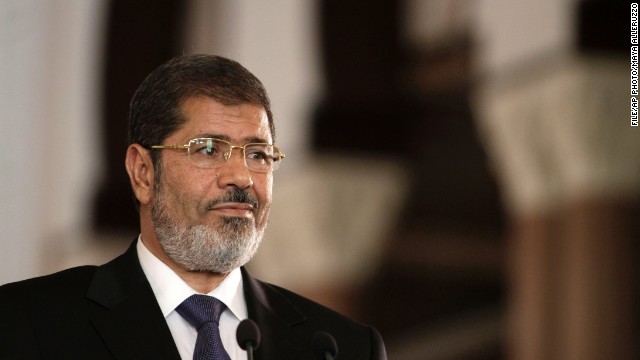
In Why Nations Fail, Acemoglu and Robinson talk about the "iron fist of oligarchy." Under this notion, new leaders replace old ones, promising radical change, but at the end of the day, the new leader brings nothing but more of the same extractive institutions that existed under the previous ruler. In Egypt, President Mohamed Morsy was the first democratically elected president following the absolutist rule of Hosni Mubarak. Amrou Kotb writes in Egypt and the Death of Liberalism, that liberals in Egypt demanded Morsy's resignation as they believe Morsy "used his electoral victory as a free pass to enforce an authoritarian style of government which denied its people basic human rights, supervised an increase in sectarian violence, and prioritized a regional Islamist agenda over the basic needs of the Egyptian people."
Morsy put his own wants, needs, and desires, over those of the people of Egypt. The lack of inclusiveness in Egypt will keep the Egyptian people from ever experiencing democratic freedoms and rights that exist and nations such as the United States. Kotb writes, "An Egypt which serves the interests of Bread, Freedom, and Social Justice cannot exist without a pluralistic society participating in an inclusive democracy."The extractive institutions in Egypt run by a minority of the population, prohibit the nation from prospering politically and economically.
Tuesday, November 19, 2013
5 Ways to Ruin an Economy
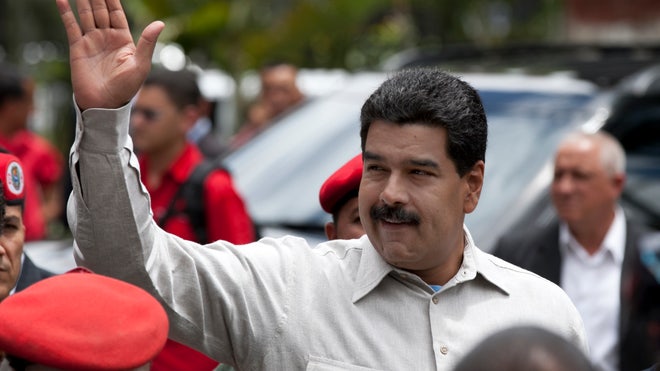
Though not an especially inclusive economy under former President Hugo Chavez by any means, Argentina's new president Nicholas Maduro seems to be ill-advisably leading his nation's economy down the road of extractive institutions. As the "Global Public Square" staff details in this article, the new regime has taken multiple steps towards more extractive institutions, starting with passing a decree granting Maduro "the ability to pass laws without consulting Congress." Additionally, the military has taken steps to nationalize big business, and despite sitting on one of the world's largest oil reserves, the government is providing massive subsidies for it to its population as well as Cuba's.
Argentina is making the classic mistakes A and R lay out for why nations fail. The government has made its political institutions even more extractive, and, as predicted, its economy is suffering from the results. The authors of this article have a foreboding warning for President Maduro: "It is beginning to resemble North Korea, simply by following the most ruinous set of policies in the world."
Sunday, November 17, 2013
When Extraction Goes Too Far
As exampled in this clip (starting around :20) from a documentary filmed in Africa, extractive political
and economic institutions can and do go too far, resulting in total collapse of
a nation.
If a leader, in this
case the former king, keeps creative destruction in mind, he can keep his
kingdom running smoothly. What’s important is that the former king realized
that he had to maintain a balance between growth and harvesting in order for all
walks of life to be comfortably sustained- he did not exploit the land for the
sake of his own indulgences.
However, some people get
greedy and want more out of the moment. As the rest of the documentary shows,
the former king was overthrown in a coup by one of these greedy individuals.
This new king focused too much on his personal benefit in the moment and failed
to plan the allocation of resources for the future. For a while his new dynasty
could run off the steam of the old, but this was mere destruction, and as AR states, “growth without
creative destruction… (is) not sustainable” (94).
This example can be
related to the USSR, which “achieved rapid economic growth (but)… little
technological change” leading to the “abrupt end” of their period of
prosperity, and eventually their total downfall (AR 94). Coming back to the
dialogue of this clip, the new king wrung the land dry of its resources,
leaving the kingdom’s inhabitants with no choice but to move on to more
habitable lands, and hopefully do better with them, or perish.
Persistence in Egypt
Less than two years ago, a revolution in Egypt to oust its authoritarian regime became a central storyline for the world to follow. Less than half a year ago, the country removed its authoritative president Mohamed Morsi from power. Today, however, it is seeming less likely that it will break out of its extractive chains and evolve into a more inclusive state. The reason for this, of course, is persistance. The very same revolutionaries that fought for inclusiveness and democracy just months ago "have since supported the increasingly authoritarian decisions of the interim government which followed".
The revolutionaries have backed measures that would do little to "scale back military authority and secure basic civil liberties". As A&R have asserted, persistence is a major reason that states seem to be bound to the vicious cycle of extractive institutions. Despite the initial intentions of the liberal revolutionaries in Egypt, a backslide into extractive institutions was always a possibility given the shaky foundation of the pluralism and inclusiveness that it was supposed to foster.
"An Egypt which serves the interests of Bread, Freedom, and Social Justice cannot exist without a pluralistic society participating in an inclusive democracy, the principles of which struggle to survive within the minds of a powerless minority."
Migrant Laborers' Strife in Qatar
Migrant Laborer's Strife in Qatar
In a twist on labor extraction in the modern world economy, there are rising allegations that migrant workers employed in the construction sector of Qatar are being coerced into working long, unpaid hours in dangerously high summer temperatures. The spotlight has been placed on Qatar by Amnesty International following the country's successful bid to host the 2022 World Cup.
The significance of this report is the parallelism between the coercion of the migrant workers and aspects of a dual economy or apartheid system. The dual economy arises from the fact that Qatar is "one of the richest countries in the world" but that the wealth is consolidated in the hands of a few individuals at the head of crude oil extracting industries; certainly not in the hands of the laborers. Secondly, the coercion of the migrant labor force, which is deprived of political rights and delegated to specific low-paying job sectors, is similar to an apartheid system in which a nation's own citizens are subjected to political and labor inequalities.
Critical Juncture in Congo
Recently, the M23 rebels in the Democratic Republic of Congo were defeated by the Congolese army and UN peace-keeping force. Prior to this, the rebels had been fairly successful, capturing numerous cities including the economic hub, Goma. It is now expected that a peace document will be signed between the rebels and the Congolese government.The signing of this document provides a critical juncture for Congo. It is unclear whether the political grievances of the rebels will be addressed and/or whether any definitive change will come out of this document. Acemoglu and Robinson point to critical junctures like this as a crucial point for economic development. The changes coming out of this document could have a significant impact on the future of Congo.
Indonesian Leader's Corruption (Again)
One will know that a country's extractive political institution is at its worst state when a judge, that supposedly upholds the constitution, actually violates it. Just last month, Indonesia's Constitutional Court chief justice, Akil Mochtar was arrested for allegedly accepting a bribery over an election dispute case in Central Kalimantan - one of the provinces in Indonesia.
This sheds a negative light onto the legal institution and surely shows how prevalent and deeply rooted extractive political institution in Indonesia is. This also brings into question the commitment and possibility of Indonesia in moving forward to eradicate corruption and extractive institutions in the future since the political leaders (the high-ranking judge in this case), whose responsibility is to put an end in corruption, are exactly the ones who actually commit the crime.
Thursday, November 14, 2013
Merry Christmas and Happy Extractive Institutions!
Surprise! Christmas came early. Or at least it did this year when Venezuela's President Nicolas Maduro declared November 10th Christmas.
Extractive state control of aluminum, iron, and bauxite factories have ultimately caused Venezuela's economy to struggle with an annual inflation greater than 45% and a government shortage of foreign currency. The country is visibly suffering, and in order to boost his popularity prior to the December 8th elections, Maduro has declared that all workers would receive 2/3 of their bonuses and pensions on November 10th. And he created a new cabinet post called the Deputy Minister of Supreme Happiness. Will the Christmas spirit be enough to boost his popularity despite the damage his extractive economy has wrought?
Afghanistan Air Force reaches Critical Juncture
The Air Force in Afghanistan has reached a new milestone, marking a huge development since its creation, according to USA Today. The Air Force has now mastered the ability to take soldiers who have been injured off the battlefield without the help of the US. Previously, they had not had the skills to be able to do this. The amount of causality missions has increased by 341, a huge deal in their fight against the Taliban. This is a critical juncture because it is the first time the Air Force is able to support themselves and their troops without the US. Since the US removed aid, the forces in Afghanistan have been struggling. However, this huge accomplishment shows self sufficiency and the ability for Afghanistan to begin to develop their own programs, a huge step from the country we went into 12 years ago.
Wednesday, November 13, 2013
The Extractive Nature of Corporate Publishing
http://uwire.com/2012/04/20/editorial-amazons-dirt-cheap-e-book-prices-hurt-authors/
Writers and creative minds alike are often demoralized by the extractive nature of large, professional publishers. Authors can dedicate years of their lives researching and writing literature, convincing editors to publish them, and tweaking their work to fit the ideals and needs of the publisher. Upon finally entering a contract with a publisher, according to the Wall Street Journal, modern artists will only receive $1,000-$5,000 as an advance (usually just enough to cover a month's rent if they're lucky). This advance has vastly decreased from past advances which could reach $100,000 to $500,000 for fiction. It's estimated that only 15% of the revenue from a hardcover book, upon sale in a store or online, will return to the author, while a publisher will earn 50% of the sale. An author might see a higher percentage return (25%) on an eBook, however electronic copies of books are sold at such a discounted rate that this return is often lower than that of a physical copy. Still, authors are almost forced to use a corporate publisher over electing to self-publish because oftentimes they themselves don't have the time, or access to markets, advertising, and resources that the corporations have. This subjugation of the creative minds behind literature is basically a vicious cycle because they don't have any other reasonable options than to bring their work to a mass-publisher. This makes me wonder what kind of returns Why Nations Fail brought to Acemoglu and Robinson, who would have to split the probably minimal profits between themselves for co-authoring the book.
Article: "Authors Feel Pinch in Age of E-Books" Jeffrey Trachtenberg
online.wsj.com/news/articles/SB10001424052748703369704575461542987870022
Sunday, November 10, 2013
Apartheid Photographer
This article by CNN's Errol Barnett offers a look into the life of one of Africa's most distinguished photographers, David Goldblatt. He is followed through as he captures images of the African Apartheid and the havoc that it wrecks on the working class. His images show the purposeful and designed poverty of the Apartheid system.

Through his moving images we see the direct results of extractive political institutions and the resulting brutally uneven distribution of wealth and power that comes along with them. Sadly, A&R's idea of persistence has been exemplified in the long existence of the Apartheid until 1994, from which point the political and economic imbalance has largely persisted.
Saturday, November 9, 2013
Critical Juncture in Mongolia
The country on Mongolia has experienced growth recently, with economic growth rates upwards of 10% the past three years in a row. This growth has been largely due to coal production and mining exploration associated with a project called Oyu Tolgoi. However, recently the sustainability of Mongolia's economic growth has been threatened.
An article titled "Mongolia's Economy is at a Crossroads" highlights the threats to economic growth in Mongolia. The article points to "nervous foreign investors, a drop in Chinese demand for coal, and uncertainty surrounding Oyu Tolgoi" as challenges facing the economy. Mongolia's is now at what Acemoglu and Robinson would call a "critical juncture". The actions of the Mongolian citizens and leaders will determine whether they continue on the path of economic growth.
Friday, November 8, 2013
The Smartphone Revolution
In Why Nations Fail, Acemoglu and Robinson discuss at end about the importance of the Industrial Revolution and the roll it played in a country's ability to prosper economically in the future. Countries that received the effects and benefits of the Industrial Revolution ultimately have gone on to become the more prosperous countries of today. On the other hand, countries that did not participate in the Industrial Revolution went on to struggle economically in the future. The entire continent of Africa missed the Industrial Revolution and its benefits and have felt the effects of this for decades.
The continent however is not missing the Smartphone Revolution. Nmachi Jidenma argues in The real mobile revolution: Africa's smartphone future, that the rise of smartphones in Africa will improve the daily lives of Africans. The rise in smartphone popularity has driven app developers on the continent "to invest their skills acquisition and app development" in Africa's smartphone future. For Africans, these smartphone apps would be useful in solving "key pain points in their day to day lives from mobile commerce to transit ticketing." GoMetro, as pictured, "Aims to improve commuting in South Africa by providing real-time train schedules, associated platform changes, a trip planner, fare calculator and route maps." Africa missed the Industrial Revolution, ultimately hindering the continent's ability to experience economic prosperity for decades. The smartphone revolution however will have a profound impact on the continent, as it will greatly improve the African people's day to day lives, ultimately improving their productivity as a whole.
Thursday, November 7, 2013
Cocoa Crisis in the Ivory Coast
An Ivory Coast court has sentenced 15 prominent "cocoa barons" for embezzlement that began during the tenure of former President Laurent Gbagbo. The corruption of the Ivory Coast's most lucrative industry is of no surprise. Gbagbo's term in office was mired by corruption, violence, and crimes against humanity. Charges are currently pending on the former president. Upon his defeat in the Ivory Coast's latest election, Gbagbo refused to leave office before finally being forcefully removed. As A&R have proven, this created a highly extractive and volatile dynamic that allowed the "cocoa barons" to exploit such economic and political institutions to their benefits. When the political arrangement allows for such corruption at the highest levels of government, it should be of no surprise that society organizes itself in an exploitative and extractive manner.
Subscribe to:
Posts (Atom)